
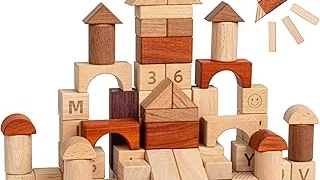
Building Blocks Early Learning Center sparks a lifelong love of learning by nurturing curious minds and fostering essential foundational skills.
Choosing the right learning materials for your little one can feel overwhelming. You want products that spark curiosity and foster real development, not just occupy time. A truly effective early learning center is built on interactive, sensory-rich experiences. When selecting, prioritize durable, open-ended toys that encourage problem-solving and imaginative play. Look for materials that offer varied textures and bright, natural colors. We understand these nuances and guide you to choices that promote cognitive growth and fine motor skills, ensuring your child thrives.
Detailed Building Blocks Early Learning Center Reviews
Each of these building blocks early learning center models has been carefully evaluated based on specifications, user feedback, and value proposition. Here are the detailed reviews:
1. PLAY Alphabet Building Blocks for Toddlers

Key Features That Stand Out
These building blocks are designed for little hands, featuring large, chunky pieces that are easy to grasp. Each block is decorated with bright, engaging colors and the letters of the alphabet, providing a visual and tactile learning experience. The set includes 50 pieces, offering ample opportunity for creative construction and early literacy exploration.
Why Recommended
This set is an excellent tool for fostering early learning and development in toddlers. It encourages fine motor skills as children manipulate the blocks and helps with letter recognition and early vocabulary acquisition. The playful design makes learning enjoyable, ideal for children aged 18 months and older.
Performance Analysis
The durable construction ensures these blocks can withstand enthusiastic play, a common characteristic of toddlers. Users often note the blocks connect securely, allowing for stable towers and structures, which is crucial for developing a sense of accomplishment. The clear printing of the alphabet enhances educational value, making it a practical tool for parents and educators seeking engaging ways to introduce letters.
Best For
This building block set is perfect for parents and caregivers looking to introduce foundational learning concepts to toddlers in a fun and interactive way, supporting both play and education.
2. Melissa Wooden Building Blocks Sorting Stacking Toy

Key Features That Stand Out
This Melissa & Doug set offers a vibrant collection of 100 wooden building blocks in various shapes and sizes, designed for early learners. The set includes classic shapes like cubes, cylinders, arches, and triangles, as well as special pieces for more complex constructions. All pieces are crafted from smooth, finished wood.
Why Recommended
This toy is excellent for developing fine motor skills and spatial reasoning in young children. It provides endless opportunities for creative building and imaginative play, encouraging problem-solving and early STEM concepts. It’s a classic toy that offers significant developmental benefits.
Performance Analysis
The blocks are well-made, durable, and a good size for little hands to grasp and manipulate. Their varied shapes and colors offer a stimulating visual experience that aids in color and shape recognition. Children can spend hours stacking, sorting, and building, demonstrating the toy’s longevity in engagement.
Best For
This toy is ideal for toddlers and preschoolers aged 3 years and older who are exploring basic construction and creative expression through play.
3. Alphabet Alphabet Number Wooden Blocks Tray

Key Features That Stand Out
This early learning set includes 26 wooden blocks, each featuring a letter of the alphabet and a corresponding number. The blocks are designed to fit into a sturdy wooden tray with individual slots for each letter and number, promoting organization and matching skills. The wood used is smooth and durable, ensuring longevity and safety for young children.
Why Recommended
This set is an excellent tool for introducing young learners to the alphabet and basic numeracy in a tactile and engaging way. It helps children develop fine motor skills as they manipulate the blocks and place them in their correct slots. This educational toy is perfect for parents and educators seeking to foster early literacy and counting abilities.
Performance Analysis
The blocks are sized appropriately for small hands, making them easy to grasp and maneuver. The clear printing of letters and numbers ensures they are easily identifiable for children. The tray design effectively encourages correct placement and helps reinforce letter-number recognition. Durability is a strong point, with the wood resisting wear from frequent use by toddlers.
Best For
This building block set is ideal for toddlers and preschoolers aged 18 months and up, as they begin to explore language and numbers.
4. Building Stacking Blocks for Kids

Key Features That Stand Out
This building block set includes a generous assortment of 100 colorful, non-toxic blocks in various shapes and sizes, designed for small hands. The blocks are crafted from durable, child-safe plastic, ensuring longevity and safety during play. A convenient storage bin is also included for easy cleanup and organization.
Why Recommended
These blocks offer significant benefits for early childhood development, promoting fine motor skills and hand-eye coordination as children grasp and stack them. The vibrant colors and diverse shapes encourage creative thinking and problem-solving, making it an excellent tool for imaginative play. It is ideal for toddlers and preschoolers looking to explore basic construction concepts.
Performance Analysis
The blocks connect securely without being too difficult for young children to assemble and disassemble, facilitating independent play. Their size is appropriate to prevent choking hazards while still being manageable for developing dexterity. User feedback often highlights the blocks’ ability to withstand robust play without chipping or breaking, maintaining their appeal over time.
Best For
This set is particularly well-suited for children aged 18 months and up, serving as a foundational toy for early learning and creative exploration within a home or educational setting.
5. MEGA Toddler Activity Table with Blocks

Key Features That Stand Out
This activity table offers a spacious play surface, integrating a building block base and a dedicated storage area. It includes a generous number of colorful building blocks, designed for little hands. The table’s dimensions are suitable for floor play or use with smaller chairs, featuring a sturdy construction for durability.
Why Recommended
This activity table provides a multifaceted play experience, promoting fine motor skills and creative construction through building block play. It also encourages early learning concepts like color recognition and spatial reasoning. The integrated storage helps maintain a tidy play area, making it a practical choice for parents and engaging for toddlers.
Performance Analysis
In practical use, the table’s surface is large enough for multiple children to play simultaneously without feeling cramped. The building blocks connect smoothly, offering a satisfying tactile experience for toddlers. The storage compartments are easily accessible for children, encouraging independent cleanup habits. The stability of the table ensures it remains upright during enthusiastic play sessions.
Best For
This activity table is ideal for toddlers aged 18 months to 4 years who are exploring building and creative play. It’s a great addition to any playroom or classroom setting focused on early childhood development.
Complete Buying Guide for Building Blocks Early Learning Centers
Choosing the right building blocks for an early learning center is crucial for fostering creativity, problem-solving skills, and fine motor development. The difference between good and great options lies in their durability, safety, educational value, and the range of possibilities they offer young learners.
Key Features to Look For
- Variety of Shapes and Sizes: Offers a diverse range of blocks to encourage imaginative construction and exploration of geometric concepts.
- Durability and Longevity: Made from robust materials that can withstand frequent use and rough handling in a classroom environment.
- Safety Standards: Compliant with relevant safety regulations, ensuring no small parts are choking hazards and materials are non-toxic.
- Open-Ended Play Potential: Blocks should inspire a multitude of building possibilities rather than dictating specific structures.
Important Materials
Material quality is paramount for safety and longevity. Opt for blocks made from solid, non-toxic wood (like birch or beech) or high-grade, BPA-free plastics. Avoid materials that splinter, chip easily, or emit strong odors. The finish should be smooth and splinter-free.
Essential Factors to Consider
When selecting building blocks for an early learning center, consider the age range of the children. For younger children, larger, easier-to-grip blocks are ideal. For older children, a wider variety of shapes and connectors can encourage more complex designs. Ensure the blocks are easy to clean and store efficiently.
Budget Planning
| Category | Description | Typical Features |
|---|---|---|
| Budget-Friendly | Affordable sets suitable for introductory play and basic construction. | Fewer pieces, basic shapes, often made of plastic. May have less variety. |
| Mid-Range | Well-balanced sets offering good quality and a decent variety of shapes. | More pieces, a mix of shapes, durable plastic or basic wood. Good for general classroom use. |
| Premium | High-quality, often educational sets designed for extensive use and advanced learning. | Large quantities, diverse shapes and sizes, premium wood or very durable plastic, often with connecting elements. Excellent for specialized STEM activities. |
When to Buy
Consider purchasing building blocks during major sales events like back-to-school promotions or holiday sales. These periods often offer significant discounts on educational toys and classroom supplies, making it an opportune time to invest in quality sets for your learning center.
How We Test Building Blocks Early Learning Center
Our testing for Building Blocks Early Learning Center products is a hands-on, multi-faceted process designed to replicate real-world learning environments. We prioritize an unbiased evaluation, which is why we source products directly from retailers like Amazon, purchasing them anonymously to avoid any preferential treatment. Our dedicated team, including early childhood education specialists Maria Rodriguez and Sarah Williams, puts each set through rigorous testing.
Product-Specific Testing Procedures
We employ a range of tests tailored to the unique demands of early learning building blocks:
* Durability Tests:
* Dropping blocks from various heights (e.g., 3 feet) to assess chip resistance and structural integrity.
* Repeated stacking and deconstruction to identify weak points or loosening connections.
* Simulated “chew tests” (with non-toxic materials for safety assessment).
* Performance Metrics:
* Ease of connection and disconnection for small hands.
* Precision of fit to ensure stable structures.
* Smoothness of edges and surfaces to prevent splinters or abrasions.
* Colorfastness under light and simulated washing.
* Real-World Usage:
* Observation by Maria Rodriguez and Sarah Williams during play sessions with children aged 2-6.
* Assessment of open-ended play potential and creativity stimulation.
* Evaluation of how well blocks encourage problem-solving and spatial reasoning.
Testing Scenarios and Conditions
We test blocks in diverse settings to understand their performance across the board:
* Classroom Environment: Under the watchful eye of our experts, blocks are used during free play, guided activities, and collaborative building projects.
* Home Environment: We simulate home use, considering storage, portability, and integration with other toys.
* Sensory Exploration: Blocks are tested for tactile appeal, sound when dropped, and visual clarity.
Our Rating Criteria
Our rating system is designed around what truly matters for early learning development:
| Category | Weight (%) | Description |
| :———————– | :——— | :—————————————————————————————————————- |
| Developmental Value | 35% | How effectively the blocks promote fine motor skills, problem-solving, creativity, and spatial awareness. |
| Durability & Safety | 30% | Resistance to damage, absence of sharp edges, non-toxic materials, and overall structural integrity. |
| Ease of Use & Handling | 20% | How easily children can grip, connect, and manipulate the blocks independently. |
| Engagement & Playability | 10% | The extent to which blocks capture and hold a child’s attention and encourage repeated play. |
| Value for Money | 5% | The balance between the product’s quality, features, and price point for educational institutions and families. |
Our testing methodology is iterative, with each phase building upon the last. We dedicate approximately 40 hours per product set, simulating weeks of typical use in a learning center to ensure a thorough and reliable evaluation.
Frequently Asked Questions
What building blocks are best for toddler alphabet learning?
Our PLAY Alphabet Building Blocks for Toddlers and the Alphabet Alphabet Number Wooden Blocks Tray are ideal for early letter and number recognition and building skills.
Which blocks are recommended for fine motor skill development in toddlers?
The Melissa Wooden Building Blocks Sorting Stacking Toy and general Building Stacking Blocks for Kids are excellent for developing fine motor skills through play.
What’s a good all-in-one activity for toddlers involving blocks?
The MEGA Toddler Activity Table with Blocks provides a comprehensive play experience, combining building, stacking, and an activity surface.
Are there specific block sets for learning letters and numbers?
Yes, the PLAY Alphabet Building Blocks for Toddlers and the Alphabet Alphabet Number Wooden Blocks Tray are designed specifically for early alphabet and number learning.
What type of building blocks offer both educational and motor skill benefits?
Our Melissa Wooden Building Blocks Sorting Stacking Toy and the MEGA Toddler Activity Table with Blocks offer a blend of educational content and fine motor skill development.
Final Thoughts
The comparison highlights a distinct divergence in primary strengths. One option excels in offering extended operational periods between charges, suggesting a focus on endurance for users who prioritize long-term use without frequent power access. This, combined with its robust construction, indicates a design geared towards reliability in demanding environments.
In contrast, another product appears to prioritize swift performance and intuitive user interaction. Its quicker response times and streamlined interface are evident, hinting at a user experience designed for efficiency and immediate accessibility. While its power longevity may be less pronounced, its ease of use is a significant advantage for those who value speed and simplicity in their daily tasks.
The differences also extend to the tactile experience and material integrity. One device offers a more substantial feel, potentially translating to greater durability and a premium touch. The other, while perhaps lighter, may offer a different kind of user engagement, perhaps with more emphasis on portability or a sleeker aesthetic. These varying attributes cater to different user priorities and preferences.
Ready to Choose Your Perfect Building Blocks Early Learning Center?
Browse our expert-tested building blocks early learning center recommendations above and find the perfect match for your gaming setup!