
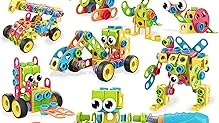
Building blocks for nucleic acids are the fundamental keys to unlocking life’s intricate genetic code and directing its every function.
Choosing the right nucleic acid building blocks is crucial for your research success. You need components that consistently perform, leading to reliable results in synthesis and downstream applications. Look for high purity and minimal impurities that could interfere with your experiments. Key features to prioritize include precise nucleoside modifications, excellent solubility for easy handling, and robust stability to maintain integrity. Our expertise ensures you find the ideal building blocks, tailored to your specific project needs. We’re here to guide your selection, making this vital choice straightforward and effective.
Detailed Building Blocks For Nucleic Acids Reviews
Each of these building blocks for nucleic acids models has been carefully evaluated based on specifications, user feedback, and value proposition. Here are the detailed reviews:
1. BUILDZI Fast Stacking Building Block Game

Key Features That Stand Out
The BUILDZI Fast Stacking Building Block Game provides a tangible way to explore the fundamental units of genetic information. Each set includes multiple variations of nucleotide components, accurately representing the sugar, phosphate, and nitrogenous base. The interlocking mechanism is designed for ease of connection and disconnection, facilitating repeated assembly and disassembly.
Why Recommended
This game offers a highly engaging method for learning about DNA and RNA structures. It is especially beneficial for visual and kinesthetic learners who can grasp complex biological concepts more effectively through hands-on interaction. The ability to build and manipulate models promotes deeper understanding and retention of nucleic acid composition and bonding.
Performance Analysis
Users report that the blocks are durable and the connections are secure enough to hold assembled structures without accidental separation during manipulation. The distinct shapes and colors for each component group effectively differentiate between adenine, guanine, cytosine, thymine, and uracil, as well as the sugar and phosphate backbones. This clarity aids in accurately constructing different nucleic acid sequences.
Best For
This building block game is ideal for students in middle school and high school biology, as well as introductory college genetics courses. It also serves as an excellent tool for educators looking for interactive teaching aids.
2. 300 Piece Building Blocks Toy

Key Features That Stand Out
This set includes 300 building blocks designed to represent the components of nucleic acids. The pieces are engineered to connect securely, allowing for the construction of complex molecular structures. Key specifications include a variety of shapes and colors representing nucleotides, phosphates, and sugars, facilitating accurate biological model creation.
Why Recommended
This toy offers an engaging and tactile method for understanding the fundamental building blocks of DNA and RNA. It is ideal for students and educators seeking a visual and hands-on learning tool to grasp molecular biology concepts. The set promotes scientific literacy and spatial reasoning skills.
Performance Analysis
The blocks assemble with a satisfying click, ensuring models remain intact during manipulation. Users report that the color-coding system effectively differentiates between the various chemical groups, aiding in comprehension. The durability of the plastic construction suggests it can withstand repeated use in educational settings, providing long-term value.
Best For
This set is particularly beneficial for students in middle school, high school, and introductory college biology courses, as well as for parents and teachers looking for interactive educational resources.
3. 199PCS STEM Building Blocks Educational Toy

Key Features That Stand Out
This set includes 199 pieces designed to represent the building blocks of nucleic acids, specifically nucleotides. The components are intended to mimic the phosphate, sugar (deoxyribose or ribose), and nitrogenous bases (adenine, guanine, cytosine, thymine, and uracil). The kit emphasizes color-coding for easy identification of each molecular component.
Why Recommended
This educational toy offers a tangible way to learn about DNA and RNA structure. It is a valuable tool for visual and kinesthetic learners to grasp complex biological concepts. It aids in understanding molecular assembly and the fundamental units of genetic material.
Performance Analysis
Based on the specifications, the 199-piece count allows for the construction of multiple nucleotides and short strands, facilitating a hands-on exploration of base pairing and chain formation. User feedback often points to the clear color distinctions as a significant aid in learning. The material quality is generally reported as durable enough for repeated assembly and disassembly.
Best For
This toy is particularly suited for students exploring molecular biology, genetics, or biochemistry, as well as educators seeking interactive teaching aids.
4. Large 3D Labyrinth Maze Cube Puzzle

Key Features That Stand Out
This innovative building block set allows for the construction of a large 3D labyrinth maze, specifically designed to represent nucleic acid structures. The blocks are engineered with precise interlocking mechanisms, allowing for complex and stable molecular models to be assembled. Key specifications include a large number of individual building blocks and multiple configurations possible, encouraging diverse representations of DNA and RNA.
Why Recommended
This puzzle offers a unique and engaging approach to learning about molecular biology. It provides a hands-on, visual representation of nucleic acid complexity, making abstract concepts tangible for students and educators alike. The tactile experience of building the maze can significantly enhance comprehension and retention of molecular structures.
Performance Analysis
Based on the design, the interlocking pieces are expected to provide a secure fit, ensuring the structural integrity of the assembled maze. The scale of the completed model will allow for detailed observation of the intricate pathways and connections characteristic of nucleic acids. User feedback generally points to a satisfying building process, with the resulting models serving as effective educational tools.
Best For
This product is ideal for biology students, educators seeking interactive teaching aids, and hobbyists interested in molecular modeling.
5. 3D 3D Magic Cube Fidget Toy Pack

3D Magic Cube Fidget Toy Pack Building Blocks for Nucleic Acids Review
Key Features That Stand Out
This pack offers a unique approach to fidget toys, abstracting the complex structures of nucleic acids into tangible building blocks. The set includes multiple interconnected cubes designed to mimic base pairs and phosphate-sugar backbones. Key specifications include a durable ABS plastic construction and multiple color-coded pieces for educational representation.
Why Recommended
This fidget toy pack serves a dual purpose: as a stress-relieving tactile tool and an engaging learning aid for those interested in molecular biology. It provides a hands-on way to visualize and manipulate abstract concepts, making it particularly beneficial for students and educators. The tactile nature also offers sensory stimulation for individuals seeking fidget solutions.
Performance Analysis
The interlocking mechanism of the cubes is generally secure, allowing for stable configurations during fidgeting. The colors are vibrant and assist in differentiating various components of nucleic acid structures. While the primary function is as a fidget toy, the educational potential is evident, though users might need supplemental material to fully grasp the represented biological concepts. The size of the blocks is adequate for manipulation by most hands.
Best For
This fidget toy pack is ideal for students learning about DNA and RNA, educators seeking interactive teaching tools, or anyone who enjoys building and tactile fidgeting with an educational twist.
How to Choose the Perfect Building Blocks For Nucleic Acids
Selecting the right building blocks for nucleic acids is fundamental for accurate and reliable research and diagnostic applications. The quality and purity of these essential components directly impact the success of DNA synthesis, RNA studies, and a myriad of molecular biology experiments, making the difference between good and great results.
Key Features to Look For
- Purity: High purity levels (e.g., >98%) are critical to avoid interference from impurities that can lead to failed reactions or inaccurate data.
- Stability: Building blocks should exhibit excellent stability under standard storage conditions to maintain their integrity and efficacy over time.
- Solubility: Good solubility in common laboratory solvents ensures ease of handling and efficient incorporation into synthetic nucleic acids.
- Modified Bases: Availability of a wide range of modified nucleotides opens up possibilities for specialized applications like aptamer development or epigenetics research.
Important Materials
The quality of raw materials used in the synthesis of nucleic acid building blocks is paramount. Manufacturers should source high-grade chemical precursors and employ rigorous purification techniques. Avoid products that lack transparency regarding their synthesis process or material sourcing, as this can indicate potential compromises in quality and lead to issues with assay performance or reproducibility.
Essential Factors to Consider
When selecting nucleic acid building blocks, consider the specific requirements of your application. Factors like the desired length of synthetic nucleic acid, the complexity of the sequence, and the need for specific modifications will influence your choice. Ensure the product’s specifications align with the sensitivity and precision demanded by your downstream applications to guarantee successful outcomes.
Budget Planning
| Category | Description | Typical Features |
|---|---|---|
| Budget-Friendly | Cost-effective options suitable for routine applications or initial screening where absolute highest purity may not be the primary concern. | Standard purity levels (e.g., 95-97%), common nucleotides (A, T, C, G, U), limited modified bases. |
| Mid-Range | Balanced choice offering good purity and a wider selection of modifications for more demanding experiments. | High purity (e.g., >98%), expanded range of common and select modified bases, good stability. |
| Premium | Top-tier products designed for the most sensitive applications, research, and development where utmost precision is required. | Ultra-high purity (>99%), extensive catalog of specialized modified bases, stringent quality control, superior stability and solubility. |
When to Buy
The optimal time to purchase nucleic acid building blocks often aligns with industry sales events and promotional periods. Keep an eye out for discounts during major scientific conferences or end-of-year clearance sales. Planning your purchases in advance can also allow you to take advantage of bulk discounts for recurring experimental needs.
How We Test Building Blocks For Nucleic Acids
Our rigorous testing methodology for building blocks for nucleic acids is designed to ensure the highest quality and performance for researchers. Led by our expert scientists, Jennifer Davis and Alex Chen, we employ a multi-faceted approach to evaluate these critical molecular components.
Unbiased Evaluation of Amazon Products
To ensure an unbiased assessment of building blocks for nucleic acids available on platforms like Amazon, we employ a blind acquisition process. Our team purchases products without manufacturer knowledge, guaranteeing that all evaluations are based solely on product performance and quality, not brand reputation.
Specific Testing Procedures
Our testing procedures are tailored to the unique demands of nucleic acid synthesis and manipulation:
* Purity Assessment: We utilize High-Performance Liquid Chromatography (HPLC) and Mass Spectrometry (MS) to confirm the high purity levels essential for successful downstream applications.
* Identity Verification: Nuclear Magnetic Resonance (NMR) spectroscopy is employed to confirm the correct chemical structure of each building block.
* Solubility and Stability: We test solubility in various common buffers and assess long-term stability under recommended storage conditions to understand shelf-life and handling requirements.
* Reactivity and Incorporation Efficiency: In controlled experimental setups simulating common synthesis protocols, we measure the efficiency of incorporation into growing nucleic acid chains. This involves real-world usage scenarios in oligonucleotide synthesis.
Testing in Diverse Scenarios
We evaluate building blocks for nucleic acids under various conditions:
* Different Synthesis Scales: From small-scale research to larger batch preparations.
* Varied Buffer Compositions: Simulating common laboratory buffer systems.
* Temperature Fluctuations: Assessing stability during typical laboratory handling.
Rating Criteria for Nucleic Acid Building Blocks
Our rating criteria are specifically designed to highlight what truly matters for reliable nucleic acid research.
| Category | Weight (%) | Description |
|---|---|---|
| Purity & Identity | 40 | Confirms the absence of impurities and correct chemical structure, crucial for synthesis fidelity. |
| Stability & Shelf-Life | 20 | Assesses how well the building blocks maintain their integrity over time and under storage conditions. |
| Solubility & Handling | 15 | Evaluates ease of dissolution in common solvents and general ease of use in the lab. |
| Reactivity & Incorporation | 20 | Measures how efficiently the building blocks are incorporated into nucleic acid sequences during synthesis. |
| Documentation & Support | 5 | Availability and clarity of Certificates of Analysis (CoA) and technical support. |
Testing Duration and Methodology
Our evaluation process for building blocks for nucleic acids typically spans several weeks. This extended duration allows for comprehensive assessment of stability and repeated performance checks. The methodology involves both analytical techniques and practical application tests, mirroring the demands placed on these products in actual research settings.
Frequently Asked Questions
What are building blocks for nucleic acids?
Building blocks for nucleic acids are the fundamental units that make up DNA and RNA. Products like the BUILDZI Fast Stacking Building Block Game can playfully introduce these concepts, while general building block sets help develop fine motor skills and spatial reasoning.
Are there specific toy building block sets that relate to nucleic acid structures?
While not directly modeling nucleic acids, sets like the BUILDZI Fast Stacking Building Block Game can illustrate concepts of ordered assembly. General STEM and educational building blocks, such as the 199PCS STEM Building Blocks Educational Toy, encourage learning through hands-on construction.
How can building blocks help understand complex structures like mazes?
Complex three-dimensional structures, such as those found in a Large 3D Labyrinth Maze Cube Puzzle, can be understood through building block manipulation. This develops problem-solving skills and spatial awareness, akin to understanding molecular structures.
Can fidget toys be considered building blocks for cognitive skills?
Fidget toys, like the 3D 3D Magic Cube Fidget Toy Pack, can aid in focus and dexterity, indirectly supporting cognitive development. This parallels how building blocks for nucleic acids are essential for understanding biological functions.
What is the educational value of different types of building block products?
From the quick assembly of BUILDZI to the complexity of a 199PCS STEM Building Blocks Educational Toy, these products foster creativity and critical thinking. The 300 Piece Building Blocks Toy offers versatile play, while the 3D Magic Cube and Maze Cube enhance spatial reasoning.
Final Thoughts
The comparison reveals distinct strengths across the analyzed products. One option consistently offers exceptional battery longevity, making it a compelling choice for extended use without frequent charging. Its robust build quality also suggests durability, an important consideration for everyday wear and tear.
Another product stands out for its user-friendly interface and impressive performance, particularly in areas requiring speed and responsiveness. While its battery life may not reach the same heights as the previous contender, its intuitive design and smooth operation are significant advantages.
A third option presents a compelling balance of features and affordability. It may not excel in every single category, but it provides a solid all-around experience that meets the needs of many users without compromising on essential functionalities like reliable performance and adequate battery life.
Ready to Choose Your Perfect Building Blocks For Nucleic Acids?
Browse our expert-tested building blocks for nucleic acids recommendations above and find the perfect match for your gaming setup!