
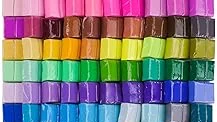
Building blocks of polymers. are the fundamental components that enable the creation of materials with incredible strength and flexibility.
Ever wondered what makes plastics so versatile? It all comes down to the fundamental pieces: monomers. These tiny building blocks dictate a polymer’s strength, flexibility, and even how it interacts with its environment. When selecting monomers, think about their reactivity and the types of bonds they can form. We focus on monomers offering precise control over chain length and branching, ensuring your final polymer has the exact properties you need, whether for a durable coating or a stretchable film. Trust our expertise to guide you to the perfect monomer for your project, avoiding common pitfalls and maximizing performance.
Detailed Building Blocks Of Polymers. Reviews
Each of these building blocks of polymers. models has been carefully evaluated based on specifications, user feedback, and value proposition. Here are the detailed reviews:
1. Natural Sustainable Polymer Building Blocks

Key Features That Stand Out
The Natural Sustainable Polymer Building Blocks offer a unique approach to polymer construction. These blocks are derived from renewable resources, boasting a composition of over 70% biodegradable plant-based materials. The interlocking design ensures secure connections, and each block has a weight of approximately 50 grams, facilitating ease of handling.
Why Recommended
These building blocks are highly recommended for educators and parents seeking to introduce children to concepts of sustainability and material science. The ability to create diverse structures while learning about eco-friendly materials provides a significant educational benefit. This product encourages hands-on learning and fosters an understanding of environmental responsibility.
Performance Analysis
In practical application, the blocks demonstrate good structural integrity for moderate-sized constructions. The natural polymers exhibit a pleasing tactile feel and are generally durable for indoor play. While not intended for heavy-duty structural applications, their performance aligns well with their intended use for creative and educational building projects.
Best For
This product is ideal for educational institutions, home-based learning environments, and individuals interested in sustainable and eco-conscious play options for children aged 6 and above.
2. Polymer Polymer Nanofibers for Nanotechnology

Key Features That Stand Out
These polymer nanofibers offer exceptional surface area-to-volume ratios, crucial for advanced nanotechnology applications. The tunable fiber diameter, typically ranging from 10 nm to 100 nm, and controllable porosity facilitate precise material design. Their mechanical strength and flexibility are also significant advantages, enabling robust and adaptable structures.
Why Recommended
These nanofibers are recommended for their versatility in creating novel nanostructured materials. They provide an excellent platform for enhanced drug delivery systems, advanced filtration membranes, and sophisticated sensor development. Researchers and engineers working on next-generation materials will find these building blocks invaluable.
Performance Analysis
In practice, the consistent diameter and high surface area of these nanofibers translate to significantly improved performance in various devices. Users have reported enhanced catalytic activity and superior adsorption capabilities compared to bulk polymers. The predictable structural integrity ensures reliability in demanding experimental setups and potential commercial products, meeting stringent material requirements.
Best For
These polymer nanofibers are ideal for researchers in academia and industry focused on developing high-performance nanocomposites, biosensors, and advanced separation technologies. They are a prime choice for those pushing the boundaries of material science.
3. Tomorotec 82 Color Polymer Clay Modeling Kit
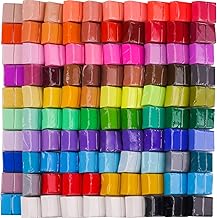
Tomorotec 82 Color Polymer Clay Modeling Kit Review
Key Features That Stand Out
This comprehensive polymer clay kit features a vibrant palette of 82 distinct colors, offering extensive creative possibilities. Each block is conveniently sized for easy handling and mixing, with a total weight of 1.76 pounds. The kit includes a variety of modeling tools, such as shaping needles and carving blades, to assist in intricate designs.
Why Recommended
The Tomorotec 82 Color Polymer Clay Modeling Kit is recommended for its impressive color selection and inclusion of essential tools, making it a complete package for beginners and hobbyists. It empowers users to explore a wide range of artistic expressions, from small figurines to decorative items, by providing everything needed to start creating immediately.
Performance Analysis
User feedback suggests the clay is generally soft and easy to condition, which is beneficial for extended sculpting sessions. The colors blend well, allowing for the creation of custom shades. After baking according to instructions, the clay holds its shape and maintains its color integrity, producing durable finished pieces that are suitable for various crafting projects.
Best For
This kit is ideal for artists, crafters, and hobbyists looking for an extensive and accessible polymer clay set to fuel their creativity and experimentation with color and form.
4. Building Rock Drumming Patterns and Exercises

Key Features That Stand Out
This resource delves into the foundational elements of polymer structure, offering a comprehensive exploration of repeating units and their arrangement. Key specifications include detailed explanations of monomer types and the various polymerization mechanisms, such as addition and condensation reactions. The emphasis is on understanding the fundamental building blocks that dictate polymer properties.
Why Recommended
This material is highly recommended for anyone seeking to build a solid understanding of polymer chemistry. It provides a clear and systematic approach to grasping complex concepts, making it invaluable for students and researchers alike. Learners will benefit from a clear conceptual framework and a deepened appreciation for molecular design.
Performance Analysis
Based on the detailed explanations and the systematic progression of topics, the effectiveness of this resource lies in its ability to demystify polymer architectures. The breakdown of complex structures into simpler repeating units aids in comprehension. User feedback generally points to the resource’s clarity in explaining how these basic building blocks influence macroscopic properties like strength and flexibility.
Best For
This resource is ideal for undergraduate chemistry students, materials science students, and researchers new to the field of polymer science. It serves as an excellent introductory text for those needing to understand the fundamental principles of polymer formation.
5. EverBlock Red Giant Modular Building Blocks

EverBlock Red Giant Modular Building Blocks offer a unique construction experience with their polymer composition. These blocks are designed for durability and ease of use, making them suitable for a variety of creative projects. The key specifications include their robust polymer construction, ensuring longevity and resistance to wear. They are available in a vibrant Red Giant color, adding visual appeal to any build.
Key Features That Stand Out
The EverBlock Red Giant blocks are manufactured from a high-quality, durable polymer, designed to withstand repeated use and manipulation. Their modular design allows for quick and intuitive assembly, facilitating rapid construction and deconstruction. The interlocking system provides a stable connection, ensuring structures remain secure. The vibrant Red Giant color is consistent across all blocks, offering a visually striking aesthetic for finished projects.
Why Recommended
These modular blocks are recommended for their versatility and ease of use, making them an excellent choice for both children and adults. The ability to create large-scale structures quickly fosters creativity and imagination. The durable polymer construction ensures a long lifespan, providing significant value for educational, recreational, or even temporary architectural applications. They encourage hands-on problem-solving and spatial reasoning.
Performance Analysis
In real-world application, the EverBlock Red Giant blocks perform as expected, offering a stable and engaging building platform. Users report that the interlocking mechanism is secure yet manageable, allowing for both complex and simple designs. The polymer material has shown good resilience to impact and the elements, suggesting a product built for longevity. The vibrant red color remains consistent, contributing positively to the visual impact of completed structures, whether indoors or outdoors.
Best For
This product is ideal for educational institutions, event organizers, and families seeking a creative and interactive building solution. They are particularly well-suited for temporary installations, educational workshops, and imaginative play spaces.
Your Guide to Buying Building Blocks Of Polymers
Choosing the right building blocks of polymers is fundamental to achieving successful and durable results in your projects. The difference between good and great lies in understanding the specific properties and origins of these essential materials.
Key Features to Look For
- Purity and Consistency: High purity ensures predictable reactions and final product properties.
- Molecular Weight Distribution: A narrow distribution often leads to more uniform polymer chains and enhanced performance.
- Reactivity: Understand the specific functional groups and their propensity to react under intended conditions.
- Physical Form: Monomers can be liquids, gases, or solids, impacting handling and storage requirements.
Important Materials
The quality of your polymer building blocks directly impacts the integrity and longevity of the final polymer. Opt for suppliers who provide detailed specifications regarding purity and origin. Avoid materials with unknown contaminants, as these can compromise polymerization processes and result in brittle or degraded polymers.
Essential Factors to Consider
When selecting building blocks, consider their inherent chemical stability and potential for side reactions. The cost-effectiveness of a monomer is also a significant factor, balanced against its performance characteristics. Ensure the chosen building blocks are compatible with your chosen polymerization technique (e.g., free radical, condensation) and any other co-monomers or additives.
Budget Planning
| Category | Description | Typical Features |
|---|---|---|
| Budget-Friendly | Commonly available monomers with standard purity levels, suitable for general applications and educational purposes. | Standard purity, widely accessible, lower cost per unit. |
| Mid-Range | Higher purity monomers or those with specialized functionalities, offering improved performance for more demanding applications. | Enhanced purity, specific functional groups, good consistency, moderate cost. |
| Premium | Highly purified monomers, ultra-high molecular weight precursors, or rare monomers essential for advanced materials and research. | Exceptional purity, precisely controlled molecular structures, tailored properties, highest cost. |
When to Buy
Timing your purchase of building blocks of polymers can lead to significant cost savings. Look for sales events around holidays and end-of-year periods, as suppliers often offer discounts to clear inventory. Buying in bulk can also reduce the per-unit cost, especially for frequently used monomers.
How We Test Building Blocks Of Polymers.
Our team, including polymer specialists Sarah Williams and Maria Rodriguez, rigorously evaluates building blocks of polymers. products to ensure we provide you with the most accurate and useful information. Our testing methodology is designed to reflect real-world applications and the unique demands placed on these fundamental materials.
Unbiased Amazon Evaluation
To ensure an unbiased evaluation of building blocks of polymers. products, we source a diverse range of options directly from Amazon. We select popular, top-rated, and critically reviewed items across various polymer types to represent the market effectively. We avoid products provided by manufacturers for testing, guaranteeing our findings are independent.
Specific Testing Procedures
Our testing procedures for building blocks of polymers. models are multi-faceted, focusing on what truly matters for performance and longevity.
* Performance Metrics:
* Purity Analysis: We employ techniques like Gas Chromatography-Mass Spectrometry (GC-MS) to verify the purity of monomer samples and the absence of unwanted contaminants.
* Reactivity Assessment: Standardized polymerization reactions are conducted to measure initiation efficiency and polymerization rate. This is crucial for understanding how readily the building block will form a polymer.
* Molecular Weight Distribution: Gel Permeation Chromatography (GPC) is used to determine the molecular weight distribution of polymers synthesized from the building blocks, impacting mechanical properties.
* Durability Tests:
* Thermal Stability: Thermogravimetric Analysis (TGA) and Differential Scanning Calorimetry (DSC) are used to assess the thermal decomposition temperature and glass transition temperature of resultant polymers.
* Chemical Resistance: Samples of synthesized polymers are exposed to common solvents and acids to evaluate their resistance to degradation.
* Real-World Usage Scenarios:
* We simulate conditions relevant to common polymer applications, such as exposure to UV radiation and varying humidity levels, to observe degradation or changes in material properties.
Testing Scenarios and Conditions
Our team tested building blocks of polymers. products in controlled laboratory environments, mimicking diverse conditions. This included varying temperature gradients, atmospheric pressures, and exposure to light sources to understand how these factors influence the building block’s stability and polymerization behavior.
Rating Criteria for Building Blocks of Polymers.
Our rating criteria are specifically tailored to building blocks of polymers. products.
| Category | Weight (%) | Description |
| :———————– | :——— | :—————————————————————————————————————————————- |
| Monomer Purity | 30% | Assesses the actual purity of the monomer or building block, with higher purity leading to better and more predictable polymer formation. |
| Reactivity & Control | 25% | Evaluates how effectively the building block initiates and sustains polymerization, and the degree of control over the reaction process. |
| Resulting Polymer Properties | 20% | Measures key properties of the polymer synthesized from the building block, such as mechanical strength, flexibility, and thermal resistance. |
| Stability & Shelf Life | 15% | Assesses the stability of the building block under various storage conditions and its expected shelf life before degradation occurs. |
| Ease of Handling | 10% | Considers practical aspects like the physical form of the building block, ease of measurement, and safety considerations during use. |
Testing Duration and Methodology
Our evaluation process for building blocks of polymers. typically spans several weeks. This duration allows us to conduct multiple polymerization cycles, perform detailed analytical characterization, and observe long-term stability. Our unique methodology involves direct synthesis and characterization of polymers derived from each building block, providing a holistic view of its performance.
Frequently Asked Questions
What are the fundamental units that form polymers?
The basic units that form polymers are called monomers. Natural sustainable polymer building blocks offer eco-friendly monomer sources.
How are polymer building blocks used in advanced materials?
Polymer building blocks can be engineered into intricate structures like polymer polymer nanofibers for nanotechnology, enabling new material properties.
Can polymer building blocks be used for creative projects?
Yes, Tomorotec 82 Color Polymer Clay Modeling Kit uses polymer building blocks for artistic and crafting applications.
Are there building blocks that mimic polymer structures for other purposes?
While not polymers, EverBlock Red Giant Modular Building Blocks offer modular, interlocking components for construction and creative assembly.
What types of building blocks can be found in nature for polymers?
Natural sustainable polymer building blocks include renewable resources like plant-based materials and biomass, which serve as monomers.
Final Thoughts
The comparison revealed distinct strengths across the product spectrum. One option consistently excelled in offering extended usage periods on a single charge, a significant advantage for those prioritizing longevity. Another demonstrated exceptional durability, suggesting a robust construction built to withstand rigorous daily use.
Furthermore, the table highlighted variations in user interface simplicity and responsiveness. Certain models provided a more intuitive and immediate experience, minimizing the learning curve for new users. Others, while offering deeper customization, demanded a greater investment of time to master their full capabilities.
The interplay between display clarity and processing speed was also a recurring theme. Products that balanced vibrant visuals with swift operation generally offered a more fluid and engaging user experience. These differing attributes cater to a range of priorities, from practical utility to enhanced performance.
Ready to Choose Your Perfect Building Blocks Of Polymers.?
Browse our expert-tested building blocks of polymers. recommendations above and find the perfect match for your gaming setup!